What to Do After a Deer Collision in Kansas
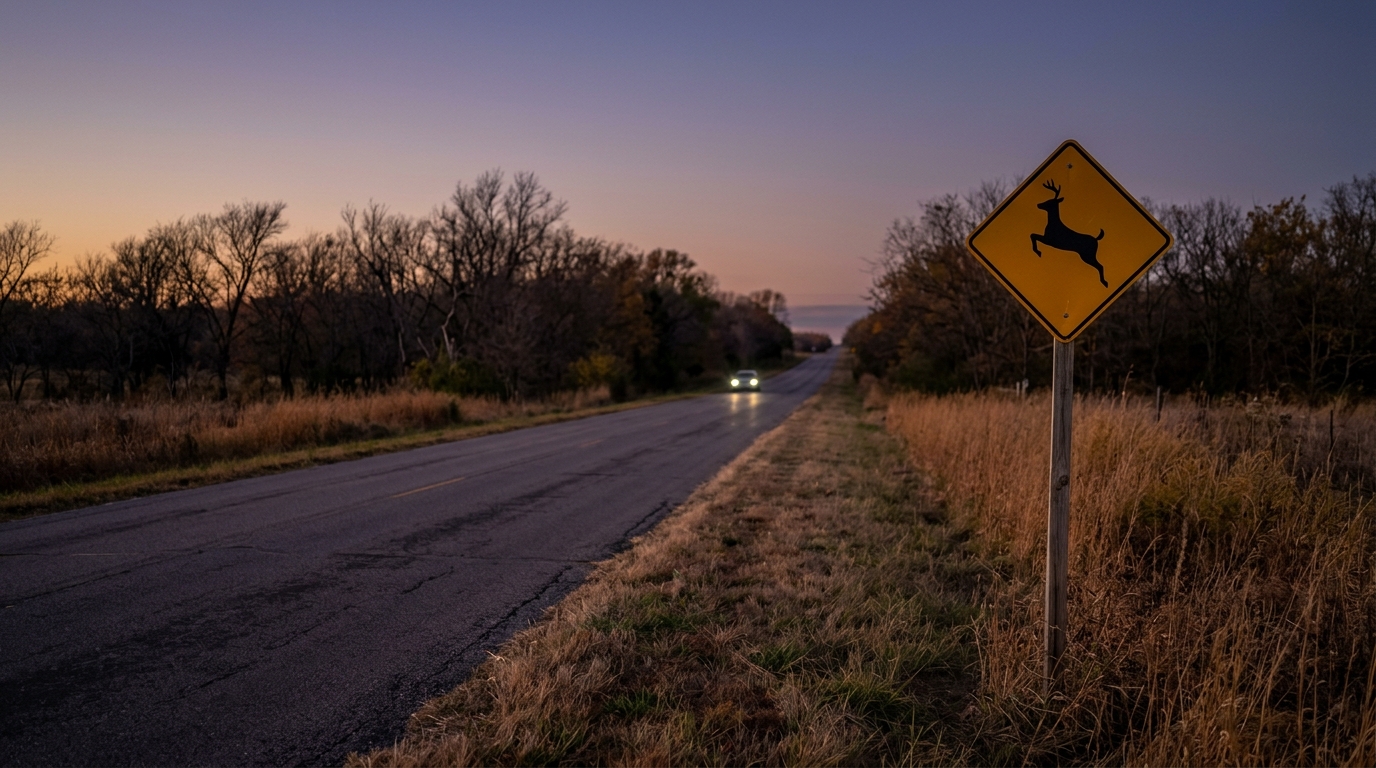
Hitting a deer—or swerving to avoid one—can be frightening, especially on rural roads and highways around Wichita and Central Kansas. The safest next step is to protect yourself and others first, then document what happened and review your insurance options. Because every policy is different, we encourage drivers to understand their auto coverage before an unexpected animal-related incident occurs.
Deer activity often increases during fall and early winter, which can make early mornings, evenings, and low-light drives more hazardous. Knowing how to respond calmly can help you handle the situation safely and make the claims process less stressful.
Move Yourself and Your Vehicle to Safety
After striking a deer or narrowly avoiding one, take a breath and assess the immediate situation. If your vehicle is operable and it is safe to do so, pull as far off the roadway as possible. Turn on your hazard lights so approaching drivers can see you.
Do not stop in an active traffic lane, even if you want to inspect the vehicle right away. On a busy Wichita street, a rural Central Kansas highway, or a dark county road, remaining in traffic can create a second and more serious risk.
If your vehicle cannot be safely moved, stay buckled in when conditions make exiting unsafe. Call for help and wait for instructions from emergency personnel. If you must leave the vehicle, be aware of passing traffic and move to a safe location away from the road.
Call Authorities When the Situation Warrants It
Calling law enforcement is a good idea when there are injuries, significant vehicle damage, debris in the roadway, or a dead or injured deer creating a traffic hazard. Authorities can help manage the scene, arrange removal of the animal when needed, and create an incident report that may be useful later.
You should also call if the collision involved another vehicle, property damage, or an unsafe road condition. If there is an immediate emergency, call 911. For non-emergency situations, use the appropriate local law-enforcement number when available.
Even after a near miss, reporting a roadway hazard may help protect the next driver traveling through the area.
Do Not Approach the Deer
It can be tempting to check on the animal, particularly if it is still near your vehicle. However, do not approach it. An injured deer may be frightened, unpredictable, and capable of causing injury with sudden movement or kicking.
Keep children and pets away from the animal as well. Let trained authorities handle an injured or deceased deer. Your priority should be maintaining distance, staying aware of traffic, and keeping everyone at the scene safe.
Document the Damage and the Scene
Once you are safely parked and conditions allow, take clear photos of the vehicle from several angles. Capture visible damage, such as dents, broken lights, cracked glass, loose parts, or fluid leaks. If it is safe to do so, photograph the general scene, roadway conditions, and any debris.
Write down the date, time, location, and a short account of what happened while the details are fresh. Note whether you struck the deer or swerved to avoid it, along with any contact with another vehicle, guardrail, ditch, or roadside object.
If law enforcement responds, ask how to obtain the report number or a copy of the incident report. Keep all repair estimates, towing receipts, and related documentation together for your records.
Report the Claim Promptly
Contact your insurer or agent as soon as practical to report the incident and ask what information is needed. Prompt reporting can help you understand next steps, including inspection procedures, repair options, rental-car availability if included in your policy, and any deductible that may apply.
At Thomas L May Service LLC, we believe personal guidance matters when an unexpected event disrupts your day. As a locally owned independent insurance agency serving Wichita and Central Kansas, we can help you review your policy, understand the claims process, and communicate with your carrier.
Avoid authorizing major repairs until you understand your insurer’s process. If your vehicle is unsafe to drive, arrange towing and retain the receipt. Safety should always come before convenience.
How Comprehensive Auto Coverage May Apply
In many cases, damage caused by striking a deer is handled under comprehensive auto coverage rather than collision coverage. Comprehensive coverage can also help with certain other non-collision losses, such as theft, vandalism, weather-related damage, or falling objects, depending on the policy.
However, coverage is never automatic. Whether a deer-related loss is covered, how a near-miss accident is handled, and what deductible applies all depend on the terms, limits, endorsements, and exclusions in your specific policy. For example, swerving to miss a deer and then striking a tree, guardrail, or another vehicle may be evaluated differently from direct contact with the animal.
Thomas L May Service LLC can help you look beyond the price of a policy and understand how your auto insurance protection is designed to respond. Because we work with multiple carriers, our team can discuss coverage options that fit your household, vehicles, and comfort level.
Prepare Before You Encounter a Deer
The best time to review coverage is before you need it. Consider checking your current auto policy for comprehensive coverage, deductibles, roadside assistance, rental reimbursement, and uninsured or underinsured motorist protection. These features address different types of risks, so it is helpful to know what each one does.
It is also wise to keep your insurance identification card, a phone charger, flashlight, and basic emergency supplies in the vehicle. When driving in areas where deer may be present, scan the roadside, reduce speed when visibility is limited, and use high beams when it is safe and legal to do so.
If a deer appears in front of your vehicle, brake firmly while maintaining control. Avoid making a sudden, unsafe swerve into oncoming traffic, a ditch, or a fixed object. Every situation is different, but keeping control of your vehicle remains the priority.
FAQ
Should we call the police after hitting a deer?
Call authorities when there are injuries, significant damage, a blocked roadway, an injured or deceased deer creating a hazard, another vehicle involved, or an unsafe situation. A report may also be helpful when filing an insurance claim.
Will auto insurance cover deer damage?
Damage from directly striking a deer is often considered under comprehensive auto coverage, but coverage depends on your specific policy. Deductibles, limits, exclusions, and the details of the incident can affect how a claim is handled.
What if we swerved to avoid a deer and hit something else?
The type of coverage that may apply can differ when a driver avoids a deer and then hits another vehicle, tree, guardrail, or object. Report the incident promptly and ask your insurer or agent to review the facts and your policy.
Should we approach an injured deer?
No. Keep a safe distance and do not try to move, touch, or assist the animal. Injured wildlife can react unpredictably, and trained authorities are better equipped to handle the situation.
How can we prepare for deer-related driving risks?
Drive attentively, slow down when visibility is limited, scan the roadside, and maintain control if an animal enters the road. We also recommend reviewing your auto coverage, deductible, and available optional protections before an incident occurs.
If you have questions about auto insurance in Wichita or Central Kansas, contact Thomas L May Service LLC. We are here to help you review your current protection and discuss coverage options that support your needs on the road.
The Mystery of Life Insurance Unveiled
Life insurance often conjures up more questions than answers, and you're not alone in your confusion. According to the 2024 J.D. Power study, only 29% of life insurance customers felt that their insurers made policies simple to understand. This blog aims to lift the veil on what life insurance truly is, how it functions, who might need it, and its potential importance in your life.What is Life Insurance?
At its core, life insurance is a contract. You agree to pay premiums, and in return, your loved ones receive a tax-free lump sum — known as the death benefit — when you pass away. This money can be used for a variety of needs such as paying off a mortgage, covering childcare or funeral costs, or even everyday expenses.Who Needs Life Insurance?
You might be wondering if life insurance is for you. Generally, anyone with dependents, debts, or funeral expenses to consider should think about life insurance. However, it’s not only for parents or spouses. Even individuals without dependents may benefit from coverage to ensure their financial legacy lives on.How Does Life Insurance Work?
Selecting the right life insurance involves deciding between term and permanent policies. Term life covers you for a specific period, while permanent life insurance provides lifelong coverage. Premiums are paid regularly, and upon your death, the death benefit is dispersed to your beneficiaries.Benefits During Your Lifetime
Life insurance isn’t just beneficial after death. For instance, with permanent policies, you can borrow against your policy’s cash value. Some policies include riders such as accelerated death benefits or premium waivers, or allow conversion from term to permanent without medical exams.Choosing the Right Policy
Deciding on the right policy might require some self-reflection. Consider questions like how much coverage you need, the duration, and whether you value simplicity over savings features. Remember to align your choice with your budget.The Customizable Nature of Insurance
Life insurance policies are not one-size-fits-all. They can be customized with riders that offer protection for situations like critical illness or provide premium waivers in the event of disability—tailoring the policy to fit your unique needs. It's perfectly okay not to have all the answers upfront when it comes to life insurance. These policies are far more flexible and beneficial than most people realize. If you're unsure where to begin or need help navigating your options, don't hesitate to reach out for guidance. Life insurance could be a key part of securing your future and your loved ones' financial well-being.
Highway Loss Data Institute
FEMA - Federal Emergency Management Agency